
Biophilic design now has a public face, as Amazon launches its Rainforest Spheres. Our interpretation of biophilic design is progressing as we find new ways of incorporating nature, or natural patterns, into the built environment.
This idea, is of course, nothing new. Roger Ulrich published a study in 1984 documenting the healing power of natural environments, suggesting that even a superficial photograph depicting a natural setting could improve a hospital patient’s outcome. Over thirty years later, healthcare designers are starting to take those studies seriously.
Lets look back a little further into modern architecture. Lina Bo Bardi, an Italian born, Brazilian Architect, has also gained popularity in recent years. Often, she is cited for her overlooked contribution to Latin American Modernism. My extended thoughts on that, here. Her projects also demonstrate a strong understanding of modern biophilic design.
Lets look at SESC Pompéia. This was designed in 1977 as a leisure center for Pompéia. This is one of my favorite projects, and theres a lot of depth to her ideas and process, but lets focus on one moment within. A small intervention, Bo Bardi created a meandering stream of water through part of the re-purposed factory. Its soft and the curvilinear, relative to the repetition of the factory walls.
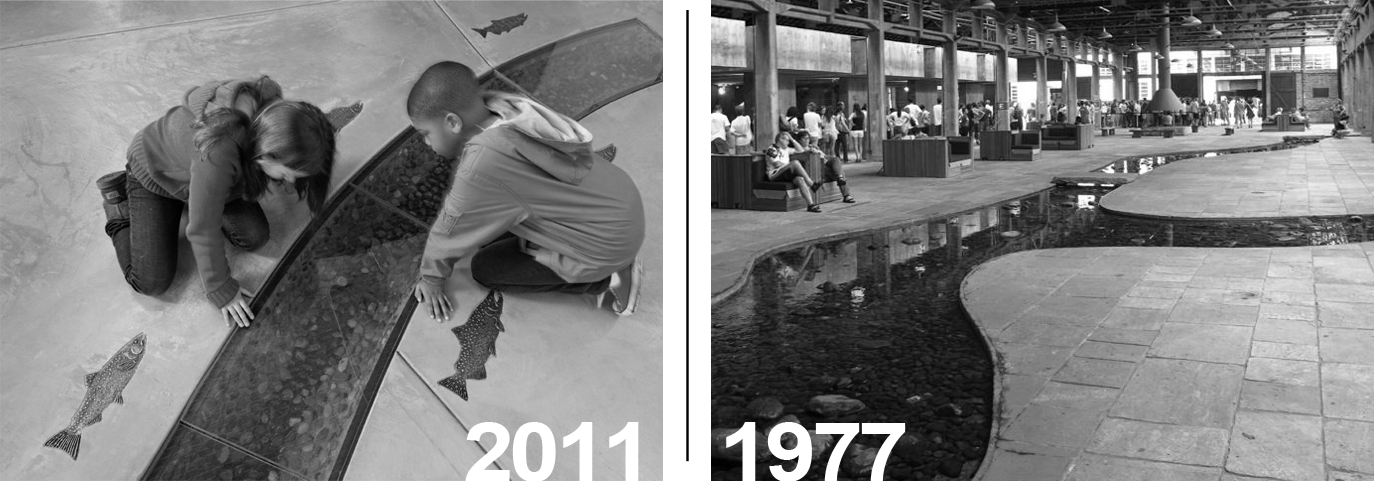
Fast forward to 2011, and we find one of the most cited examples of biophilic design from the Bertschi School, where rainwater is channeled through a classroom to highlight natural processes.
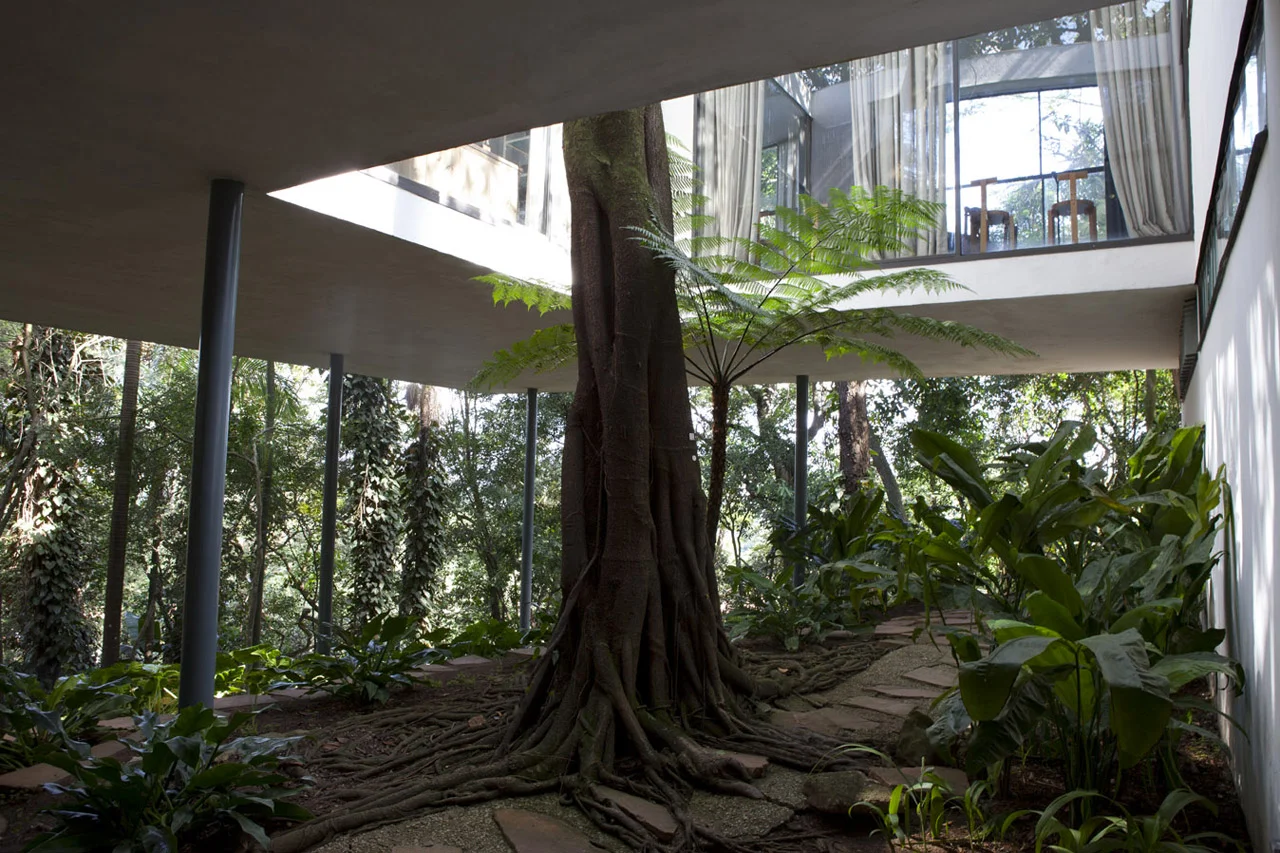
Perhaps the most striking example is Bo Bardi’s personal home in Sao Paulo, Casa de Vidro. She elevates the home on piloti that blend into the forest beyond. This leaves the house floating among the trees, and disturbs the site as little as possible. She also pays respect to a living tree, choosing to build a suspended courtyard around the existing landscape, inviting the natural world into the home.
Bo Bardi focused on architecture with a social purpose, and incorporating natural systems into the built environment was a strong component of that for her. Much more can be said about her complex socialist views and her contribution to modernism in Latin America. For more in-depth thoughts on Lina Bo Bardi’s contribution to Latin American Modernism and Architecture as a social issue, click here.